

For many of us, the grocery store is a place where our best financial intentions go to die. You walk in with a plan to spend fifty dollars, but you walk out two hours later with a receipt for a hundred and fifty. It happens so easily. Maybe the bakery smelled like fresh bread, or you saw a new flavor of chips that looked too good to pass up. Before you know it, your cart is full of things you didn’t plan to buy, and your bank account is suffering.
The biggest fear people have when they try to cut back on spending is the feeling of being “deprived.” We worry that a budget means eating nothing but plain white rice and canned beans every night. We fear that we will have to give up our favorite snacks or the high-quality ingredients we love. But here is the secret: learning how to grocery shop on a budget isn’t about eating boring food. It is about shopping smarter so you can afford the things you actually enjoy.
In this guide, we are going to look at seven “Golden Rules” that will change the way you shop. These rules are designed to help you save a massive amount of money while still keeping your kitchen full of delicious, healthy, and exciting food. By the end of this 1,500-word article, you will have a roadmap for a better budget and a better plate.
Rule 1: The “Don’t Shop the Middle” Strategy
If you want to know the most basic secret of how to grocery shop on a budget, you have to look at the store’s layout. Grocery stores are designed by experts who want you to spend as much money as possible. The most expensive, processed, and tempting items are almost always placed in the middle aisles.
The outer perimeter of the store is where you find the “whole” foods: fresh produce, the meat counter, and the dairy section. These are the items that fill you up and provide the most nutrition for your dollar. When you stay on the edges of the store, you avoid the colorful boxes of sugary cereals, the expensive pre-packaged snack packs, and the soda aisle.
By making the perimeter your home base, you naturally buy ingredients that can be turned into many different meals. A bag of potatoes or a dozen eggs can be the start of five different dinners. A box of “Toaster Pastries” from the middle aisle can only be one thing, and it usually isn’t very filling.
Rule 2: Master the Unit Price, Not the Sale Price
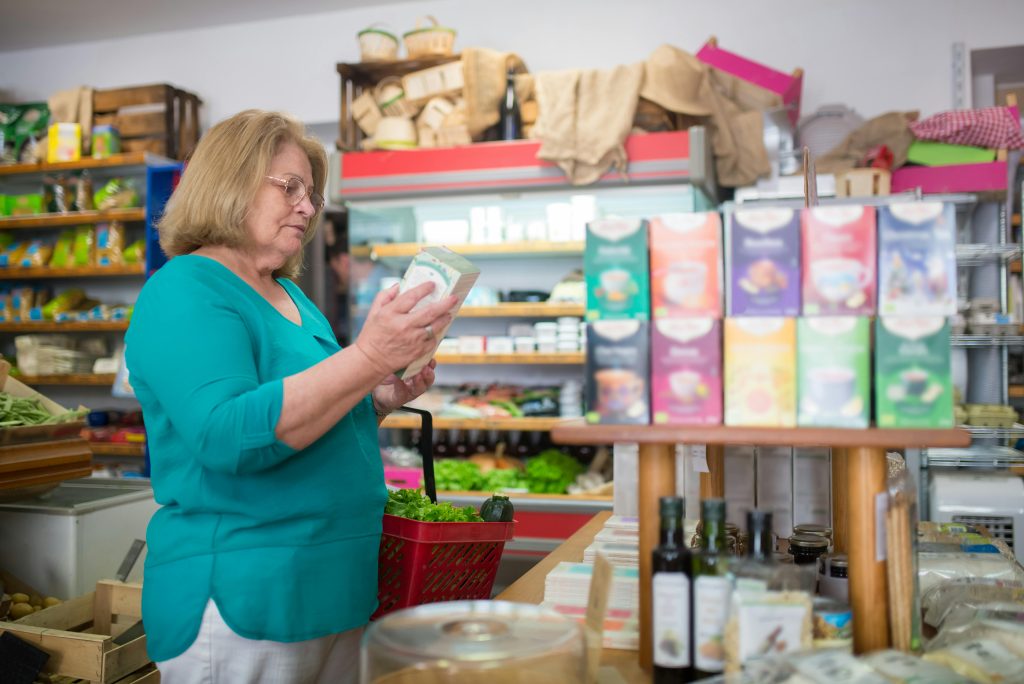
Grocery stores love to put big, bright “SALE” signs on their shelves. They might say things like “10 for $10” or “Two for $7.” But just because something is on sale doesn’t mean it’s a good deal. To truly understand how to grocery shop on a budget, you have to look at the tiny numbers on the shelf tag.
This is called the “unit price.” Usually, it is a small number in the corner of the tag that tells you how much the item costs per ounce, per pound, or per 100 sheets. This is the only way to compare two different brands fairly.
For example, a large “family size” box of cereal might look like a great deal at $5.00. But if you look at the unit price, you might find it costs 25 cents per ounce. Meanwhile, the smaller store-brand box might be $3.00, but its unit price is only 18 cents per ounce. Even though the big box looks “cheaper” because it’s a bulk buy, the smaller box is actually giving you more food for every dollar you spend.
Rule 3: The “Convenience Tax” is Real
One of the biggest leaks in a grocery budget is paying for work you could easily do yourself. Every time a vegetable is chopped, a piece of cheese is sliced, or a salad is bagged, the price goes up. This is what we call the “Convenience Tax.”
If you buy a whole head of lettuce, it might cost $1.50. If you buy a bag of pre-washed, chopped lettuce, it might cost $4.00. You are paying $2.50 just for someone to wash and chop your salad. If you do this with everything—from pre-cut fruit to individual cups of yogurt—you can easily add $40 to your weekly bill.
To avoid feeling deprived, keep your favorite luxury items, but stop paying the tax on the basics. Buy the block of cheese and grate it yourself. Buy the whole carrots and peel them. It takes five extra minutes, but those minutes are literally worth dollars.
Rule 4: Embrace the “Manager’s Special”
If you want to eat high-quality meat or organic produce without the high price tag, you need to learn when your store puts out the “Manager’s Specials.” These are items that are perfectly safe to eat but are nearing their “sell-by” date. To move the inventory quickly, the store will often mark them down by 30%, 50%, or even 70%.
This is a great way to help how to save money on groceries while still enjoying steak or fresh salmon. When you find these deals, you have two choices: cook them that night or put them straight into the freezer. The freezer “stops time” on the expiration date. You can build up a freezer full of high-end meats that you bought at a fraction of the original price. Just make sure you check the “Clearance” or “Reduced for Quick Sale” sections every time you enter the store.
Rule 5: Don’t Be a Brand Snob
There is a common myth that store-brand (or “generic”) items are lower quality than the big national brands. While this might be true for a few specific things, it is false for the vast majority of items. In many cases, the store-brand milk, flour, sugar, and canned beans are produced in the exact same factories as the expensive brands. The only difference is the label.
Swapping to store brands can save you 20% to 30% on your total bill instantly. If you are worried about the taste, try the “Single Swap” test. Every week, pick one item you usually buy as a name brand and try the store brand instead. If you can’t tell the difference, stick with the cheaper version. If you hate it, you can go back to the name brand. You will be surprised to find that for most “staple” items, the store brand is just as good.
Rule 6: Use “Meatless Mondays” (and Tuesdays!)
Meat is almost always the most expensive part of a grocery list. If you are trying to learn how to grocery shop on a budget, you have to look at how much meat you are consuming. You don’t have to become a vegetarian to save money, but you can learn to use meat as a “flavor” rather than the “main event.”
Foods like beans, lentils, chickpeas, and eggs are incredibly cheap and packed with protein. They also stay fresh in your pantry for months. By replacing meat with these alternatives just two nights a week, you can save $15 to $20 a week.
Think about a big pot of black bean chili or a lentil soup. These meals are filling, hearty, and “comforting,” so you won’t feel like you are missing out on anything. Plus, these types of meals usually make great leftovers for lunch the next day, which saves you even more money.
Rule 7: The “Full Stomach” Rule (and Digital Shopping)
We have all heard the advice: “Never shop while you are hungry.” When your stomach is growling, everything looks delicious. Your brain stops thinking about the budget and starts thinking about immediate satisfaction. This is when the frozen pizzas, the fancy cookies, and the expensive dips end up in your cart.
But there is a modern version of this rule that is even more effective: Shop online.
Many grocery stores now offer free or low-cost pickup services. You sit on your sofa after dinner, when you are full and relaxed, and you pick out exactly what you need on the app. The app shows you your total in real-time. If you see that you have hit $110 and your budget is $100, you can easily “remove” the least important item from your cart with one click.
Shopping online prevents you from seeing the tempting displays at the end of the aisles. It stops the “impulse buy” in its tracks. You get exactly what is on your list, and you know exactly what you are going to pay before you ever leave your house.
Putting the Rules into Action

Saving money is a skill that gets better with practice. You don’t have to follow all seven rules perfectly starting tomorrow. Pick two or three that feel the easiest for you. Maybe you start by shopping the perimeter and trying a few store-brand items. Once those become habits, add another rule.
When people struggle with how to grocery shop on a budget, it is often because they try to be too restrictive. They try to cut out every single treat and every single “easy” meal. This leads to “budget burnout,” where you get so tired of your strict rules that you give up and go out for an expensive dinner.
The goal of these golden rules is to give you “slack” in your budget. If you save $30 by buying store-brand staples and chopping your own veggies, you can use $5 of that to buy your favorite high-end coffee or a nice bar of chocolate. This prevents the feeling of deprivation. You are still enjoying your life; you are just being more intentional about where your money goes.
The Big Picture: Why It Matters
In a financial tips blog, we often talk about big goals like buying a house or retiring early. These goals can feel very far away. But your grocery bill is something you can change right now.
If you save $50 a week by following these rules, that is over $200 a month. Over a year, that is $2,600. That is enough money to fund an entire emergency savings account or pay for a family vacation. When you look at it that way, a little bit of time spent grating cheese or looking at a unit price tag feels like a very high-paying job.
Conclusion
You have the power to take control of your food spending. By using the “Don’t Shop the Middle” strategy, mastering the unit price, and avoiding the “Convenience Tax,” you can keep your kitchen stocked without draining your wallet. Remember to hunt for those “Manager’s Specials” and don’t be afraid to give store brands a chance.
Living on a budget doesn’t mean eating poorly. It means eating with a plan. It means being smarter than the grocery store’s marketing team. When you follow these seven golden rules, you will find that you are not only saving money but also eating better, fresher, and more creative meals. You aren’t being deprived—you are being empowered.